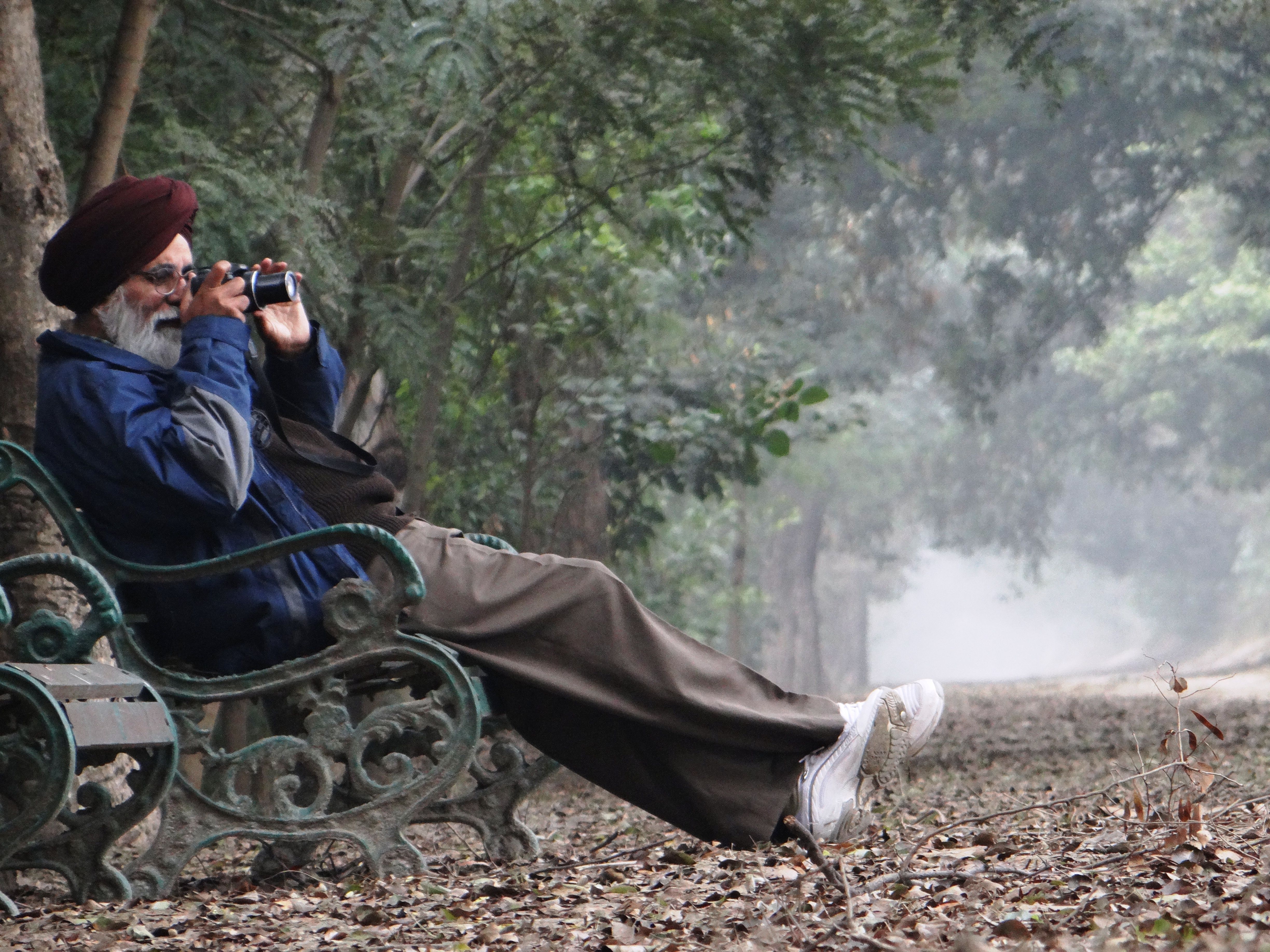
North Indian winter has a specific character. It is not the crisp cold of European winters, with snow and central heating and quiet frozen streets. It is not the mild pleasant winter of south India, where a light shawl is enough and the days remain warm. It is its own thing: dry cold air, dense morning fog, some of the world's worst air pollution, and homes that were not designed with any of this in mind.
The home in Delhi, Gurugram, Chandigarh, Amritsar, Lucknow, Jaipur, Kanpur, or any other city of the Indo-Gangetic plain, spends about four months a year (November through February) navigating this specific set of conditions. Most homes navigate it badly. The temperature drops but no proper heating exists. The air becomes actively harmful but no proper filtration is running. The wardrobe transitions but the layout of the home does not. The household member spends the winter mildly uncomfortable and does not fully register that the discomfort was avoidable.
This essay is about how the north Indian home should actually work through winter. Not as an aspirational upgrade but as a specific practical adjustment that most households under-invest in.
The heating question
A short honest note, because this is where most north Indian households quietly suffer.
Indian homes, almost universally, do not have central heating. Historically this was because the climate did not require it (winter was mild by European standards) and because the infrastructure did not exist. Currently, it is because the retrofit is expensive and central heating is not a priority in Indian home construction even at the premium end.
The result is that the household heats specific rooms with specific appliances during the winter. The oil-filled radiator in the bedroom. The blower in the living room. The room heater in the parents' room. These are workable but partial solutions. The rest of the house remains cold, and moving between rooms means moving between temperatures.
A working approach. The household should decide which two or three rooms are the winter zones and heat those properly. The main bedroom, the living room, the kitchen if it does not have its own warmth. Rest of the house is accepted as cold; the household adapts its use accordingly.
Specific heater choices. Oil-filled radiators produce gentle heat and are the right choice for bedrooms. Blowers heat quickly but dry the air aggressively; use in living rooms only. Gas and small kerosene heaters produce carbon monoxide indoors and are actively dangerous in unventilated rooms; if used, the room must be ventilated.
The air pollution problem
A short but critical section, because this is the single most underappreciated feature of the north Indian winter.
From late October through February, particulate matter concentrations in the air across the Indo-Gangetic plain routinely cross the World Health Organisation's hazardous thresholds. PM2.5 levels regularly touch three hundred and sometimes six hundred micrograms per cubic metre; the WHO recommends staying under twenty-five. The household member is, in effect, smoking the equivalent of ten or twenty cigarettes a day by breathing.
The health effects are real and documented: respiratory illness, cardiovascular strain, cognitive effects, and, over years, meaningfully reduced life expectancy. Children and elderly parents are particularly affected. This is not an aesthetic problem; it is a medical one.
The response the household should be running. Good air purifiers in the rooms where the household spends the most time, running through the peak pollution hours. HEPA-filter purifiers from the good brands (Coway, Sharp, Dyson, Blueair, Xiaomi at the entry level) are effective. One in the main bedroom, one in the living room, and one in the child's room, is the working minimum for a family home.
A specific note. Air purifiers only work if the room is closed. Open windows and doors defeat them. During the peak pollution weeks (mid-October through mid-February in the worst years), keep windows closed and doors between rooms closed to allow the purifiers to work.
The single most important intervention is monitoring. An air quality monitor (five to fifteen thousand rupees for a good one) tells the household what the actual PM2.5 is in the room, and confirms whether the purifiers are working. The household that has been running its purifiers without monitoring often does not know that a filter has clogged and the purifier is doing nothing.
The wardrobe of blankets and rezai
A short atmospheric section, because this is where north Indian winter has its specific comfort.
The rezai is the traditional Indian winter quilt: a heavy cotton or silk shell filled with cotton or silk floss batting. The good rezai, made in cities like Jaipur or Delhi in the traditional workshops, is meaningfully warmer than any comforter and has a specific weight that many households find deeply comforting on cold nights.
A working winter bedding setup. A cotton sheet as the base layer. A woollen blanket over the sheet. A rezai on top, folded back during the mildest weeks and pulled up in the peak of winter. Extra shawls at the foot of the bed for the household member who runs colder.
The winter wardrobe itself is a specific working set. Wool sweaters. Cashmere shawls if the household has invested in them. Warm socks (wool or silk-lined). A quilted jacket for going outdoors. The specific Indian dressing gown, called a chogha in some regions, worn indoors over pyjamas for the coldest weeks.
These are not fashion items. They are functional infrastructure, and the household that has invested in them properly is meaningfully warmer than the household running on inadequate summer-weight fabrics.
North Indian winter, taken seriously, is one of the most beautiful periods of the household's year. The specific quality of the light. The specific character of the fog. The specific pleasure of being warm indoors while the outside is cold. The household that has prepared for winter properly experiences all of this fully. The household that has not spends the season mildly cold and mildly miserable, and does not know why.
The winter kitchen
A short seasonal note.
The Indian kitchen shifts through winter. Specific vegetables come into their peak: sarson, methi, palak, gobi, gajar, mooli. Specific dishes make sense in the cold that would not in summer: makki di roti with sarson da saag, gajar ka halwa, hot pinnis with ghee, thick dals like maa ki dal, hot ginger and jaggery-based drinks.
The winter kitchen leans warmer. More ghee. More whole spices. More slow-cooked dishes that fill the house with warm smells for hours. This is the traditional Indian winter cuisine and is meaningfully different from the light monsoon cuisine or the summer cuisine.
The household that has kept these specific winter dishes as part of its rotation is not just eating well; it is participating in a specific seasonal food practice that connects the household to the calendar. The child who grows up with makki di roti in December, gajar ka halwa in January, and gud with everything through the cold weeks, has a specific memory of what winter meant in the house.
The morning sun room
A specific room-level note, because this is one of the highest returns in the north Indian winter.
North Indian winter mornings, when the fog lifts, produce some of the most pleasant winter sunshine anywhere. The air is cool, the sun is warm on the skin, the sky is often bright blue for a few hours. This is the specific winter gift that no other season in India delivers.
The household should have a specific morning sun room. The room in the house that faces east or southeast, that receives the direct morning sun through a large window, and that has been set up as the place the household gathers in the mornings during winter. This room becomes, for four months, the heart of the house.
The setup is simple. A comfortable chair or two by the window that catches the sun. A small side table for the morning tea or coffee. A blanket to keep the legs warm during the coldest weeks. A view outside, however modest, that the household member can look at while sitting there.
The morning hour in this room, sitting with the sun on the skin and a warm drink in the hand, is one of the great small pleasures of north Indian domestic life. The household that has organised this room properly finds itself using it every winter morning and remembering the winter later for these specific hours.
The specific pleasures
A short final section. Winter has real gifts alongside its challenges: the fog lifting in the morning as the sun cuts through, the specific low golden light of December afternoons that photographers and painters know is unique, the visiting season when relatives come from far cities and the extended family gathers around specific festivals. The winter home hosts more than the summer home.
The longer view
North Indian winter is, in its specific character, one of the most distinctive four months of the Indian domestic year. It is difficult in real ways (the pollution, the cold without central heating, the fog that limits outdoor life) and rewarding in real ways (the morning sun, the specific foods, the family gatherings, the quality of winter light indoors).
The household that has taken winter seriously as a specific season, and has prepared the home for it properly, experiences these four months with the specific quality they are capable of. The purifiers running. The heating in the right rooms. The wardrobe transitioned. The morning sun room set up. The kitchen shifted to winter dishes. The rezai on the bed. All of this is small preparation, none of it expensive relative to the household's overall spending, and all of it dramatically shifts the quality of the winter experience.
The household that has not done this work moves through winter as an obstacle. It is cold, the air is bad, the days are short, the mornings are foggy, and the household waits for spring. This is a specific unnecessary loss. Winter is not an obstacle. It is a season, with its own gifts, and the north Indian home should be set up to receive them.
The deeper lesson, one the essay series has come back to repeatedly, is that the seasons are not neutral. Each season asks something specific of the home, and each season offers something specific in return. The household that has learned to hear both parts of the exchange is the household that is living in genuine dialogue with the year outside. Winter in north India, with all its specific difficulties, is one of the seasons that most rewards this dialogue. It is worth the small work of preparation. The reward is a season that becomes, in memory, one of the specific pleasures of the year rather than something to be endured.