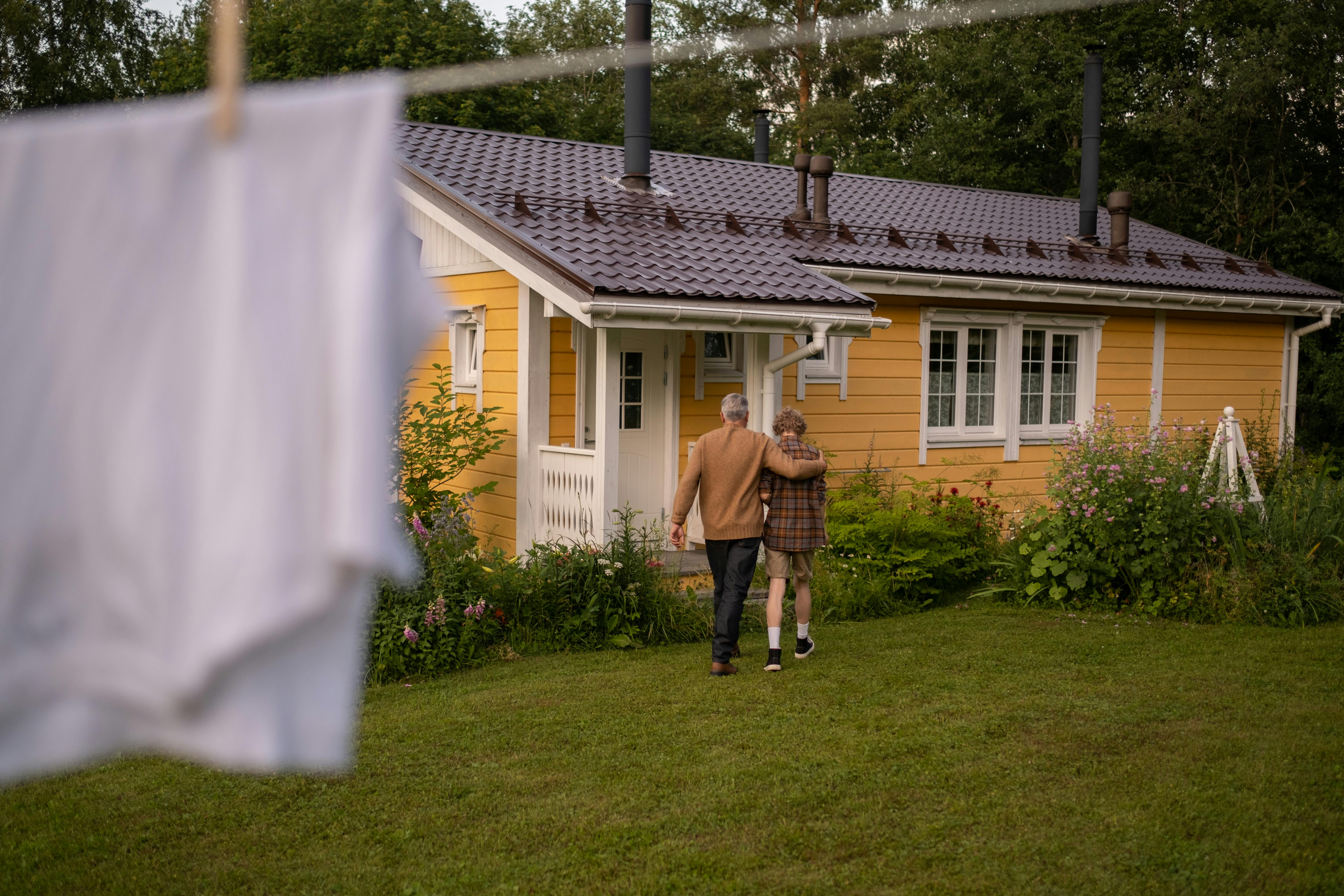
The home has a life cycle that runs alongside the family's. The first years, when the couple moves in and the walls are still bare, are the home's youth. The middle decades, when the children grow up and every room is in constant use, are the home's productive years. And then, quietly and without ceremony, the home enters its own old age. The children have long since moved out. The couple who built the home are themselves old. The rooms that were full of activity are quiet for most of the day. The house is still the family home, but the family has become smaller, older, and slower.
This phase, which can last twenty or thirty years, is one of the most tender periods in the life of any home. It is also one of the least written about. The essay series has looked at homes at every other stage: the young home, the growing home, the household in transition, the home during holidays and hosting. This penultimate entry is about the home in its own final chapter.
What happens to a home that has been lived in for thirty or forty years by the same family. What the walls carry by this point. What the objects mean. What kind of quiet fills the rooms. What the specific care of such a home requires. And what the older home offers to the couple that has aged inside it.
The very-old home
A short attempt to describe the specific quality.
A home lived in for thirty years by the same family develops a specific character that no newer home has. The wooden floors have the specific patina of three decades of walking. The wall corners have the specific softness of small daily contact. The furniture has settled into specific configurations that the family barely notices anymore. Every object has a place. Every place has a history.
This is not the same as a home that has been decoratively aged. The very-old home is aged by use, which is different from age in style. The specific quality is not consciously aesthetic; it is the accumulated evidence of a long specific life having happened in a specific place.
Visitors to such homes often notice something they cannot name. The home feels settled. The atmosphere has a specific weight. Nothing is trying. Everything has already found its shape. This is what happens when a home has been the primary residence of the same family for decades. It cannot be manufactured. It can only be lived into being.
The quieter household
A short observation.
The very-old home usually holds a very small household. The couple in their seventies or eighties. Sometimes just one of them, after the other has passed. Occasionally an adult child who has moved back to help with care, or a grandchild for a specific period. Mostly, though, the household is one or two people, and the home is quiet for most of the day.
This quiet is not empty. It has a specific texture. The kettle in the morning. The specific radio programme at eleven. The visitor who comes on Tuesdays. The specific sound of the newspaper being folded. The quiet is filled with small specific presences that a busier household would not notice at all.
The couple living in the very-old home often reports that the quiet, which they initially found difficult, has become one of the specific pleasures of the phase. There is space to hear. There is time to notice. The specific detail of a specific afternoon has room to be present.
This is not universally true. Some older couples find the quiet lonely and struggle with it. The point is not that the quiet is automatically good. The point is that, for many families, this specific quiet becomes something they had not previously known and, once they have inhabited it, would not want to give up.
The objects that carry weight
A specific note on what happens to possessions in the very-old home.
Over decades of ownership, most objects have quietly lost meaning while a few have gained it. The furniture that was bought new thirty years ago is now just furniture; it has stopped being specifically anything. But the specific objects that have been part of specific important moments have acquired a weight that new objects cannot have.
The wooden box that held the wedding jewellery. The specific chair the mother sat in when the grandchildren visited. The set of letters at the back of the specific drawer. The photograph that has been on the specific side table for twenty-five years. These objects are, in the very-old home, no longer just objects. They are specific anchors of specific memories, and the household member who lives with them lives, in some sense, alongside the entire life that produced them.
This is a specific quality of very-old homes that is worth naming. The home is not just a container for current life. It is a container for the entire past life, held in specific objects, available to the household member every day.
Some households find this heavy. Others find it deeply sustaining. Which one it becomes depends on the specific relationship the household member has developed with the past over decades, and on how much has been done to make the past a warm presence rather than a heavy one.
The very-old home is one of the most specific goods that a life can produce. It cannot be bought. It cannot be styled into being. It can only be lived into. The couple that has arrived at the very-old home, and has kept it well, is inhabiting one of the specific unrepeatable achievements of a long life together.
The reduction to what matters
A short specific practice.
Over the years, the very-old home tends toward a specific reduction. Not because the household has consciously simplified, but because certain rooms stop being used and certain objects stop being reached for. The dining room where the family used to eat every night is now used only when the children visit. The formal living room has become the room where the grandchildren play. The specific corner where the couple actually spends most of their waking time has become smaller and more specific.
This reduction is worth working with rather than against. The specific rooms that are still fully alive should be the ones that receive the specific care. Fresh flowers there. Good lighting. The specific comfortable chair. The specific reading table.
The rooms that have quieted should be honoured but not maintained as if they were still in daily use. The dining room can be kept clean and dignified without being staged for meals that no longer happen there. The formal living room can be present in the house without being a burden.
This is not downsizing. It is a specific working relationship with the rooms as they now are, which allows the household to focus its energy where the actual life is happening.
The visits
A short section on what is specifically important in this phase.
The very-old home lives through specific visits more than through daily use. The children come from their own cities for the specific weekends. The grandchildren come during specific holidays. The specific old friend who has been visiting for forty years still comes for the specific quarterly lunch.
These visits are what makes the very-old home continue to be a family home. The couple should not wait for them; they should specifically invite them. The children should be actively asked to come. The grandchildren should be encouraged to visit for a specific week each summer. The specific old friends should be reached out to. This active invitation signals that the home is still open, still expecting, still ready to receive.
The dignity of the older home
A short final section before the longer view.
The very-old home, cared for well, has a specific dignity that no other home has. It is not the sharp aesthetic dignity of a well-designed newer home. It is a slower, deeper dignity: the specific dignity of a place that has held a specific long life and continues to hold it.
The couple that has arrived at this phase, and that has kept the home in this specific dignity, has produced something that the culture does not usually notice. There are no awards for the very-old home. There are no design magazines that feature it. Its dignity is quiet and available only to those who visit it.
This specific dignity, once experienced, is difficult to forget. The children who grew up in the home, now visiting as adults, feel it. The grandchildren feel it, in a way they cannot name. The specific old friends feel it. The home is, in its old age, doing one of the specific things it was always meant to do: holding the accumulated life of a specific family, with grace.
The longer view
The very-old home is one of the specific products of a life. It is not, mostly, planned into being. It happens because a specific family lived in a specific place for a specific long time and did the small work of keeping it well through the decades. This is a long and specific achievement.
The essay series has argued, across nearly a hundred entries, that homes are not neutral containers. They are active participants in the life of the family, shaping the household's hours and holding the family's memory. The very-old home is the endpoint of this argument: the home that has become fully a family home, over decades, and continues to be one even as the family that made it enters its own old age.
This is worth honouring, particularly in a culture that has become increasingly comfortable with moving. The family that has stayed in one place for thirty or forty years, and has continued to keep that place well, is preserving something that the more mobile life cannot preserve. This something is not always easy to name. But visitors to the very-old home feel it, and the family that lives there feels it more strongly still.
The final chapter, then, of the home's own life. The children have gone. The couple is old. The rooms are quieter. The objects hold weight. The visits matter more. All of this is the specific richness of the very-old home, available only to families that have kept a specific place long enough to arrive at it. Those who do are inhabiting one of the specific quiet goods a long life together can produce. The essay series has spent almost a hundred entries recommending the small attentions that build good homes over years. The very-old home is what those attentions, sustained across a life, eventually produce.