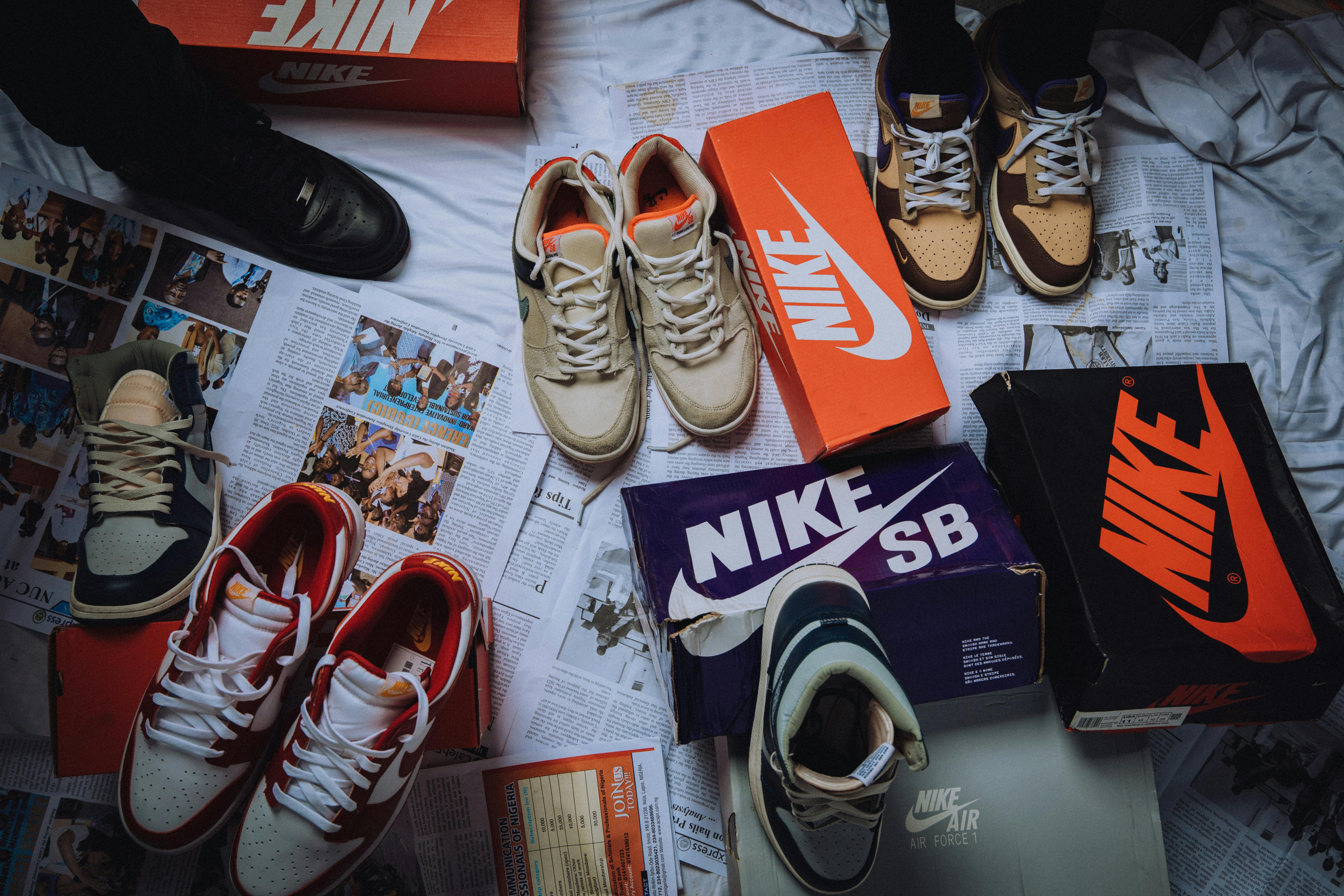
The wedding shoe phenomenon. The Indian wedding circuit demands specific shoes: the embroidered juti, the kolhapuri, the formal black oxford, the heels in three colours. These are bought for one event each and worn perhaps twice in a lifetime. They occupy the shelf for decades, retaining their slight stiffness because they were never broken in. The household with five years of wedding seasons behind it has, often, fifteen pairs of these in various corners.
The aspirational pair. The running shoes bought when the household member resolved to run. The hiking boots from the year of the planned Himalayan trip. The leather brogues for the office life that was supposed to be more formal than it turned out to be. Each pair represents a small intention that did not survive. Each pair is, in some sense, an unhealed disappointment about the self that was supposed to wear them.
The gift shoe. The pair that came from a parent or sibling who knew the household member's size but not their taste. The pair that does not quite fit but was expensive and given with care. These cannot be discarded without guilt and are not worn for the same reason. They sit at the back of the shelf, weight without function.
The inherited pair. The mother's sandals after she passed. The father's good leather shoes that the son cannot wear but cannot give away. These are objects of memory rather than footwear, and they belong on a different kind of shelf, perhaps, but not the working shoe shelf that the household uses daily.
The shoe shelf, examined honestly, is one of the more revealing inventories in the home. What it contains is rarely what is worn. What is worn is rarely what was imagined. The audit, when it comes, is also a small reckoning with the gap between the two.
The honest audit
The audit, done well, follows a simple sequence. Pull out every pair the household owns and lay them in a row. Walk through them slowly. For each pair, the question is honest: when did I last wear these, and when will I next wear them?
The pairs worn in the last month stay. They are the active wardrobe. The pairs worn in the last year but not the last month are seasonal or occasional and stay, with a small note that next year is the deadline. The pairs not worn in over a year are the question. The household member asks honestly: is there a known specific occasion in the next year that will use them? If yes, they stay (with the test deferred a year). If no, they go.
The shoes that go have several destinations. The wearable but unwanted go to donation: a building security guard, a domestic worker, an NGO. The unwearable go to disposal. The shoes that are sentimentally weighted but functionally useless need a separate conversation with the household member who is attached to them; sometimes the right answer is a single photograph, kept, and the shoes themselves released.
The result of an honest audit is typically a reduction of fifty to seventy percent. The household that owned twenty pairs is left with six or eight. The shelf, suddenly, has room for the working pairs to sit properly, each in its own space, accessible and visible.
What care looks like, for what remains
The household that has pared down to a small working set of shoes finds, almost automatically, that those shoes get better care than the larger collection did. Each pair occupies enough mental space to be noticed. The leather gets the conditioning it asked for; the suede gets brushed; the sole gets watched for wear.
A short set of habits that, applied to a small shoe collection, extends life meaningfully. Leather shoes should be cleaned and conditioned every few months; the household with three pairs of leather can do all three in twenty minutes. The shoes need rest between wearings; the household member who alternates between two pairs of work shoes rather than wearing the same one daily extends both pairs by perhaps double. Shoe trees, made of cedar or simple plastic, hold the shape and absorb moisture; they make a meaningful difference. The shoes need to be cleaned before they are stored; the dust and grime of the day, left on, slowly degrades the leather and the stitching.
Monsoon adds a specific challenge. The leather shoes that get wet must be stuffed with newspaper and dried slowly, away from direct heat. The household member who places a wet shoe in front of a fan or a heater is hardening the leather and shortening its life. The slow dry is the right one.
What to buy, going forward
The household that has pared down typically also wants guidance on what should replace what was let go. A short principle, applied honestly, prevents the new collection from accumulating in the same way.
Buy slowly, and buy for the life you actually live. The shoe that the household member will wear thirty times a year is not worth the same investment as the shoe they will wear three hundred times. The daily-wear leather oxford, the daily walking shoe, the daily sandal: these justify quality and price. The wedding juti, worn twice annually, does not.
Replace, do not add. When a pair wears out, the household member buys one pair to take its place. Not a pair plus another. Not two pairs because there was a sale. The shelf stays at the right size because each new arrival has a departure attached to it.
Resist the marketing. The shoe industry, like fashion generally, depends on the household member buying shoes they do not need. The new running shoes will not, by themselves, make the person run. The Italian leather boots will not, by themselves, make the office life more impressive. The household that has been through one honest audit knows this with particular clarity, and uses the knowledge as a defence against the next round of accumulation.
The small ceremony of the right shoe
A reflection worth landing on. The shoe that fits well, that has been worn in, that suits the household member's actual life, is one of the closer relationships a person has with an object. It carries them through the day. It shapes itself to the foot. It records, in small creases and worn places, the cumulative walking of years. The right shoe, worn for a decade, is in some sense a friend.
The household with twenty pairs cannot have this relationship with any of them. Each pair is too occasional, too lightly worn, to develop the patina that the long relationship needs. The household with six pairs has, instead, six known objects, each carrying a particular role, each worn enough to age. The collection is poorer in number and richer in depth.
The longer view
The shoe shelf, well managed, becomes a small mirror of the household's relationship with possessions in general. The household that has pared down to a working set, that cares for what remains, that wears each pair long enough to wear it in, has applied to footwear the principle that increasingly governs the rest of its home: own less, care more, use longer.
The result is a smaller shelf, certainly. But also a different daily encounter: the household member, choosing shoes in the morning, faces six known options rather than twenty half-known ones. The choice is easier, the pair is better, and the small daily ritual of putting on shoes becomes a small daily affirmation of a wardrobe that has been thought about. This is, in some sense, all that any object in the home should ask: that it be considered, that it be worn or used until it has earned its place, and that the rest be released with the dignity they deserve.